- How To Stay Curious
- Posts
- #10: Curiosity & Relationships / Habituation / Rachel Warwick / Code-Switching / Eggrolls and more
#10: Curiosity & Relationships / Habituation / Rachel Warwick / Code-Switching / Eggrolls and more
Curiosity in all things!

How To Stay Curious
February 11, 2026 • Estimated Reading Time: 5 minutes
Love is curiosity sometimes. Concentrated wondering about the other one.
————————————————————————————————
Why Curiosity: Who makes the best partners?
My being curious doesn’t win me any awards in my marriage, but according to research it probably isn’t hurting it either.
“When you show curiosity and you ask questions, and find out something interesting about another person, people disclose more, share more, and they return the favor, asking questions of you,” says Kashdan. “It sets up a spiral of give and take, which fosters intimacy.”
+
Kashdan says that curiosity seems to help in longer-term romantic relationships, where keeping interest alive is key to preventing breakups. He points to research by Arthur Aron that found most relationships don’t end because of conflict or financial difficulty, but because of boredom. Engaging in novel, interesting activities together can be key to making even long-term relationships closer, he says. [link below].
(See the risks of habituation on relationships in this week’s WHY question below too!)
One of the reasons this newsletter is formatted as questions and links, is that asking questions is one of the easiest ways to grow your curiosity. And research has shown asking questions is indeed a means to increase intimacy, and not just in relationships with partners but also among family, and even with strangers too:
The right questions can help us connect with strangers – and create closer bonds between parents and children…
If this sounds vaguely familiar, that may be thanks to a viral New York Times article that explored self-disclosure in dating focused on 36 specific questions. Asking them could help people fall in love, the journalist argued. But the principle can in fact be applied to any conversation, without ever referring to the original prompts, says Brummelman: "It's more a shift of mindset than a list of questions."
Lots of good tips around questions in BBC article above and curiosity in general in the article below.

WHY…
We Get Bored of the Best Things in Life—and How to Fight It
Habituation has many benefits, but there’s also some serious downsides.
Romance tip: don’t let your relationship get boring, predictable, or repetitive!
See the opening: Why Curiosity above!
Have you ever wanted something so badly, gotten it, and then, after a bit of time has passed, begun to feel like maybe you want something else instead—despite the fact that the thing you acquired or achieved is objectively positive? Maybe you desperately wanted to be in a relationship after years of being single—and then one day you found yourself in the partnership of your dreams, feeling bored and lusting after just about anyone who wasn’t your partner? In all likelihood, nothing was wrong with you or your relationship. You’d simply done what your brain has evolved to do: habituate.
“Habituation is a phenomenon by which we respond less and less to things that are constant, or that change very gradually,” says neuroscientist Tali Sharot, PhD. It’s the subject of a new book she co-authored with Nudge author and Harvard Law School professor Cass Sunstein called Look Again: The Power of Noticing What Was Always There, which describes how despite its many benefits, habituation can cause us to appreciate even the most positive things less over time, and explores how this can sabotage our happiness—and even cause us to blow up our lives.

WHO…
is Rachel Warwick? (The woman who is allergic to water!!!)
Literally allergic to her OWN TEARS! I can’t even image what it would be like to try and live with this.
Whatever the causes, according to Marcus Maurer, a dermatologist who founded the European Centre for Allergy Foundation (ECARF) in Germany, this is a devastating illness which can transform lives. “I have patients who have had urticaria for 40 years and they still wake up with wheals and oedema [swelling] every day,” he says.
Sufferers may be depressed or anxious, always worrying about when their next attack will strike. “In terms of quality of life impairment it’s one of the worst skin diseases you can have,” he says.

WHERE…
does your romantic type come from?
Evidently, many people have narratives about their own romantic preferences. But I wanted to know whether a “type” really does tend to guide our dating decisions—and, if it does, whether that truly is such a bad thing. Obviously, it’s unhealthy if you’re using it to stereotype, or to fetishize people’s physical qualities. But I thought there might be a way to reconcile being open-minded in who you date with recognizing that you respond for a reason to certain values or personality traits. So I spoke with some psychologists.
They told me that type is real, but maybe not in the way you think. It’s not a random collection of attributes that magically compel you; on the contrary, it could have roots you can trace clearly to the formative relationships of your past. And it might serve you to do so.
WHEN…
Will Robots Take Over Laundry Folding?
“A big challenge in teaching robots the skill is the infinity of ways that various fabrics can fold. Think about all the times you’ve tossed a T-shirt into the laundry basket and how it landed in a slightly different-shaped heap each time. It’s simple for people to pick up a shirt and quickly find a sleeve or collar to orient themselves, but every unique way a shirt crumples is a new challenge for robots, which are often trained on images of unwrinkled clothing lying flat on a surface, with all features visible.
“It’s not the fabric itself that is the challenge. It’s the amount of variations that can be created by the way fabric can be crumpled, and all the different kinds of clothing items that exist,” says David Held, a robotics researcher at Carnegie Mellon University in Pittsburgh."
/https://tf-cmsv2-smithsonianmag-media.s3.amazonaws.com/filer_public/98/df/98dfdf33-f69e-4efa-9ee4-90314d6b2592/gettyimages-1451359924.jpg)
WHAT…
Is Code-Switching?
I still think my favorite example of code switching will be watching Obama interact with a mix of black and white guys (there’s a super brief clip of one such example in the article if you watch the attached video).
At this point, though, code-switching has transcended official languages and dialects and become a colloquial catch-all term for any kind of socially motivated shift in language (whether intentional or not). Does your voice creep up a couple octaves when you talk to babies (or dogs)? Do you catch yourself pronouncing water as “wooder” after a few days with your Philadelphia relatives? Do your work emails bear almost no grammatical or lexical resemblance to the DMs you send your best friend? Those scenarios all involve code-switching.
HOW…
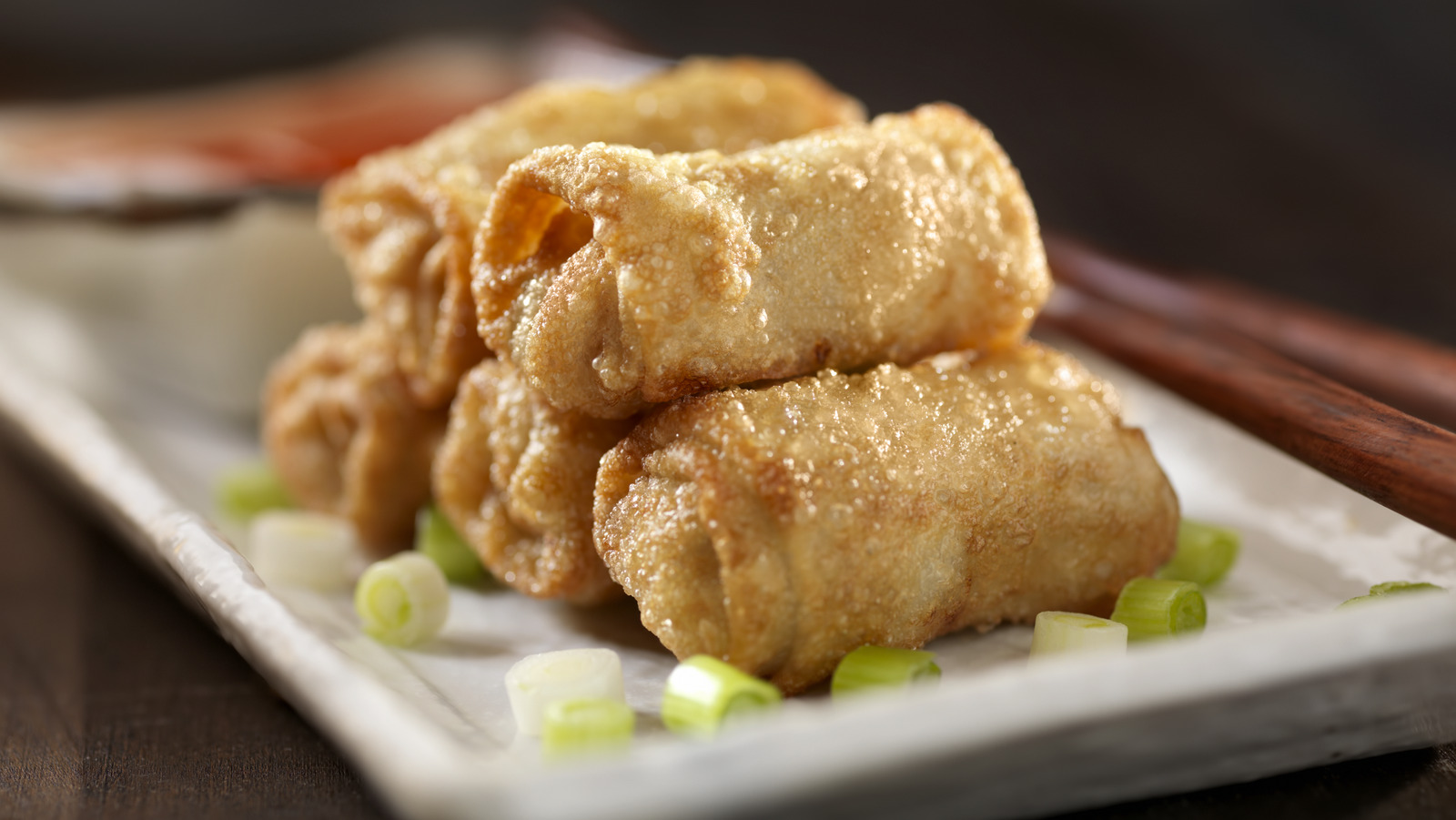
Did Egg Rolls Actually Get Their Name?
Everyone knows and loves crispy, cylindrical egg rolls. Arguably the backbone of any appetizer course when ordering a Chinese meal, these humble treats are a household name. But did you know they are actually called dan gun? According to a 1917 Chinese American cookbook, the name egg roll is simply a translation, a simplified phrase for Western consumers.
You might wonder where the egg aspect actually comes into the dish. There's shredded cabbage, vegetables, and possibly meat, all wrapped up in a blistered wheat flour dough, yet its namesake is notably absent.
Find out what happened to the egg…
Spending some time redoing this template, prepping the domain for relaunch, and figuring out a means to share street art that’s all above board. We’ll see how far we get this week!
Stay curious!
Rob